Extend service hours
Accept document translation requests outside normal counter hours, including nights, weekends and holidays.
Scan on site. Translate with remote professionals. Print at the same kiosk. Bring document translation to notary offices, ports and more locations, with less need for dedicated on-site linguists.
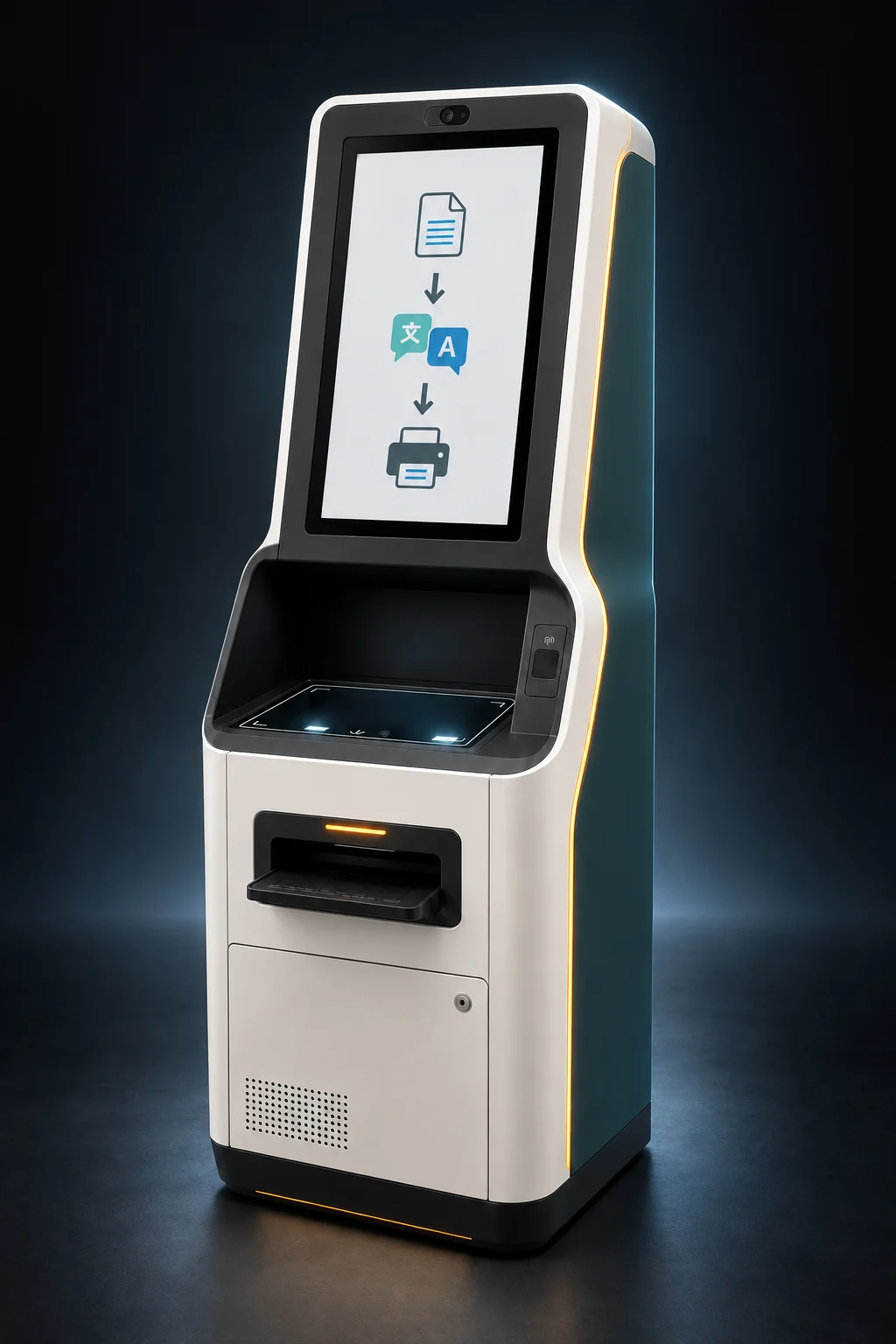
The kiosk guides scanning, service confirmation and collection. Professional linguists handle translation remotely, with a 24/7 service desk connecting every step.
The user handles a simple front-end flow. The professional work is completed remotely and returned to the same device.
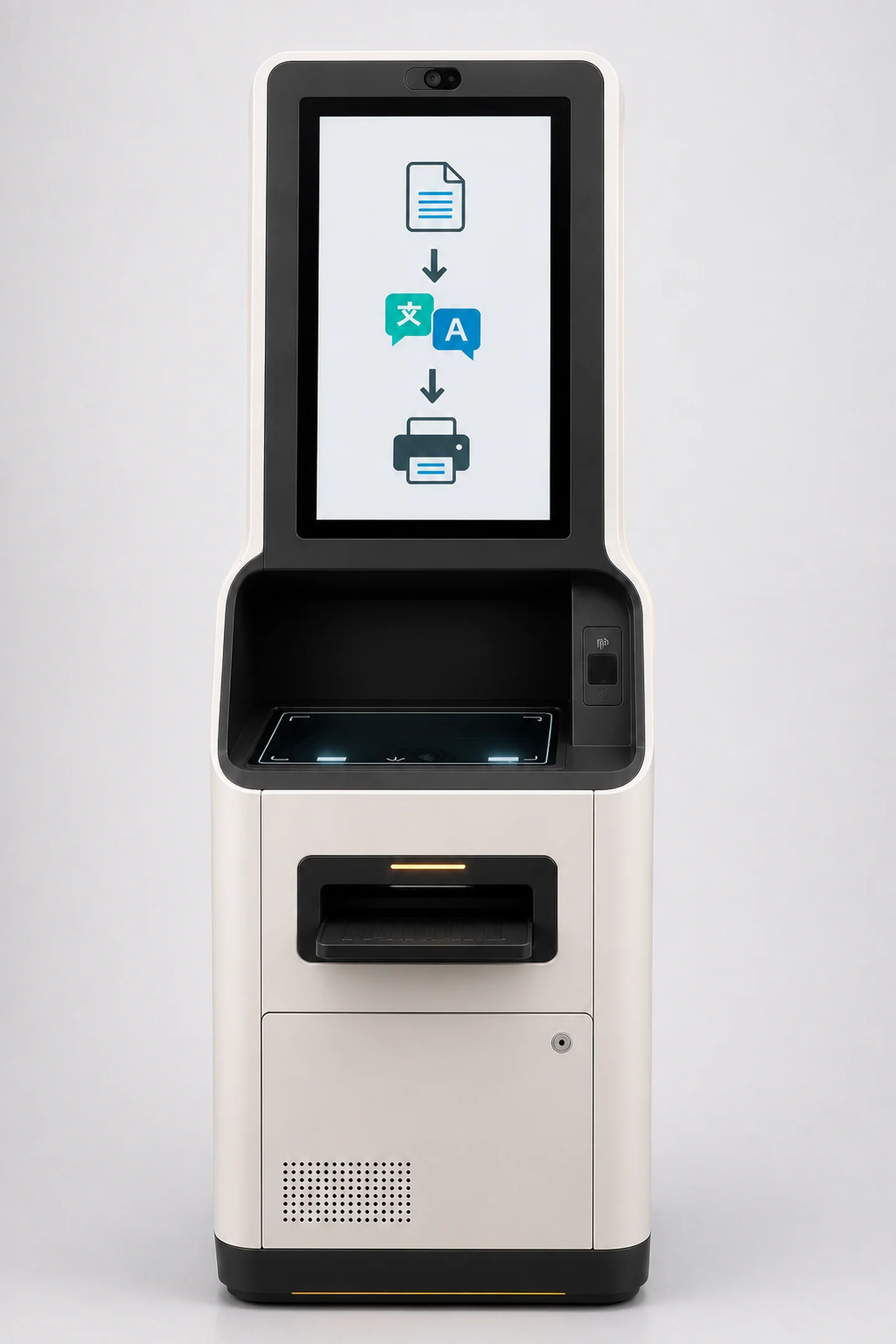
Remote translation, on-site delivery
The user places the certificate or supporting document in the scanning area.
Scanning, handoff, translation, return and printing stay connected in one traceable service journey.
The strongest locations combine steady document demand with users who value immediate, on-site service.
Government service halls, business centers and other high-traffic locations can also be evaluated together based on document demand and site conditions.
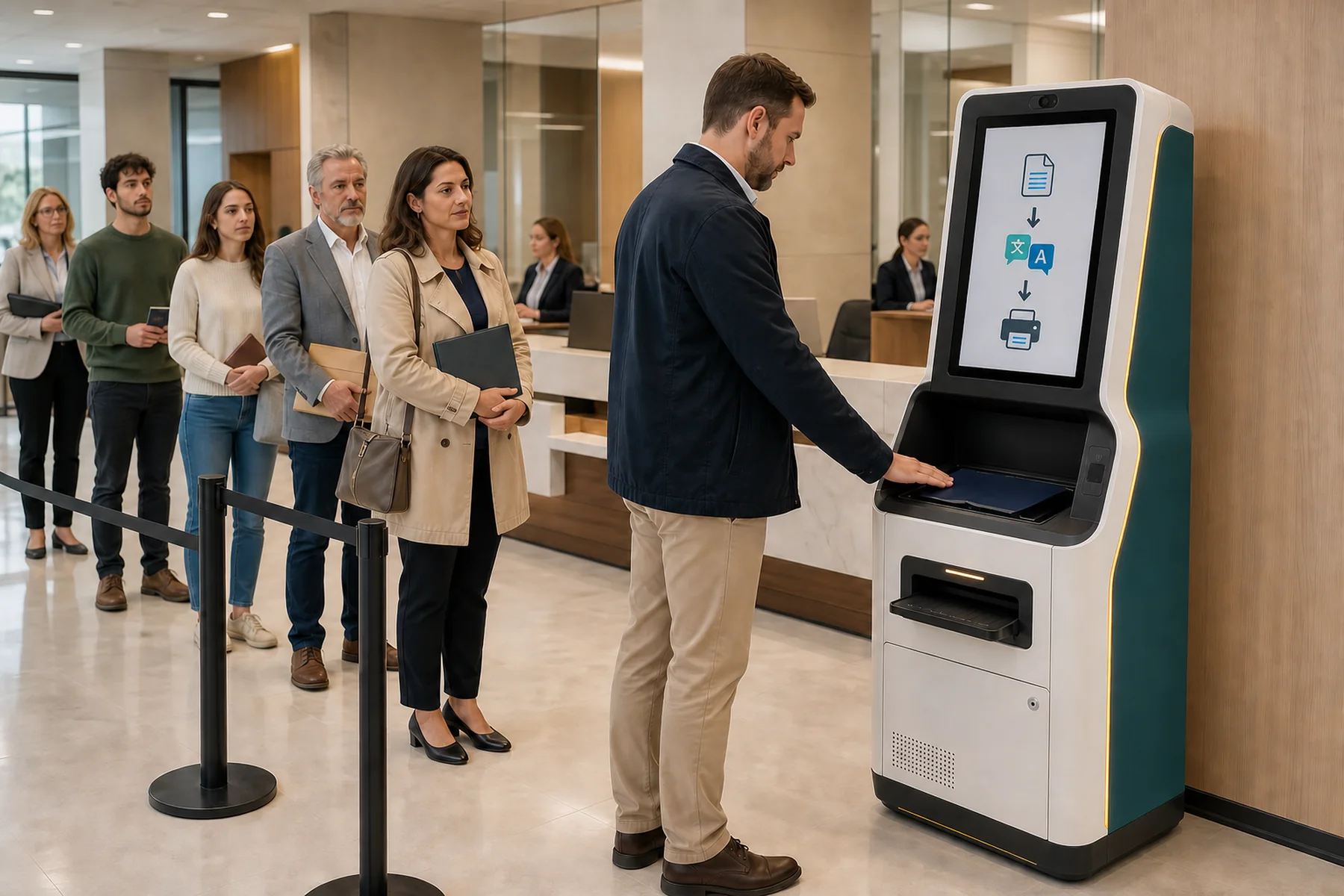
Give visitors an on-site translation entry point while they are preparing or processing documents, including outside the service desk’s staffed hours.
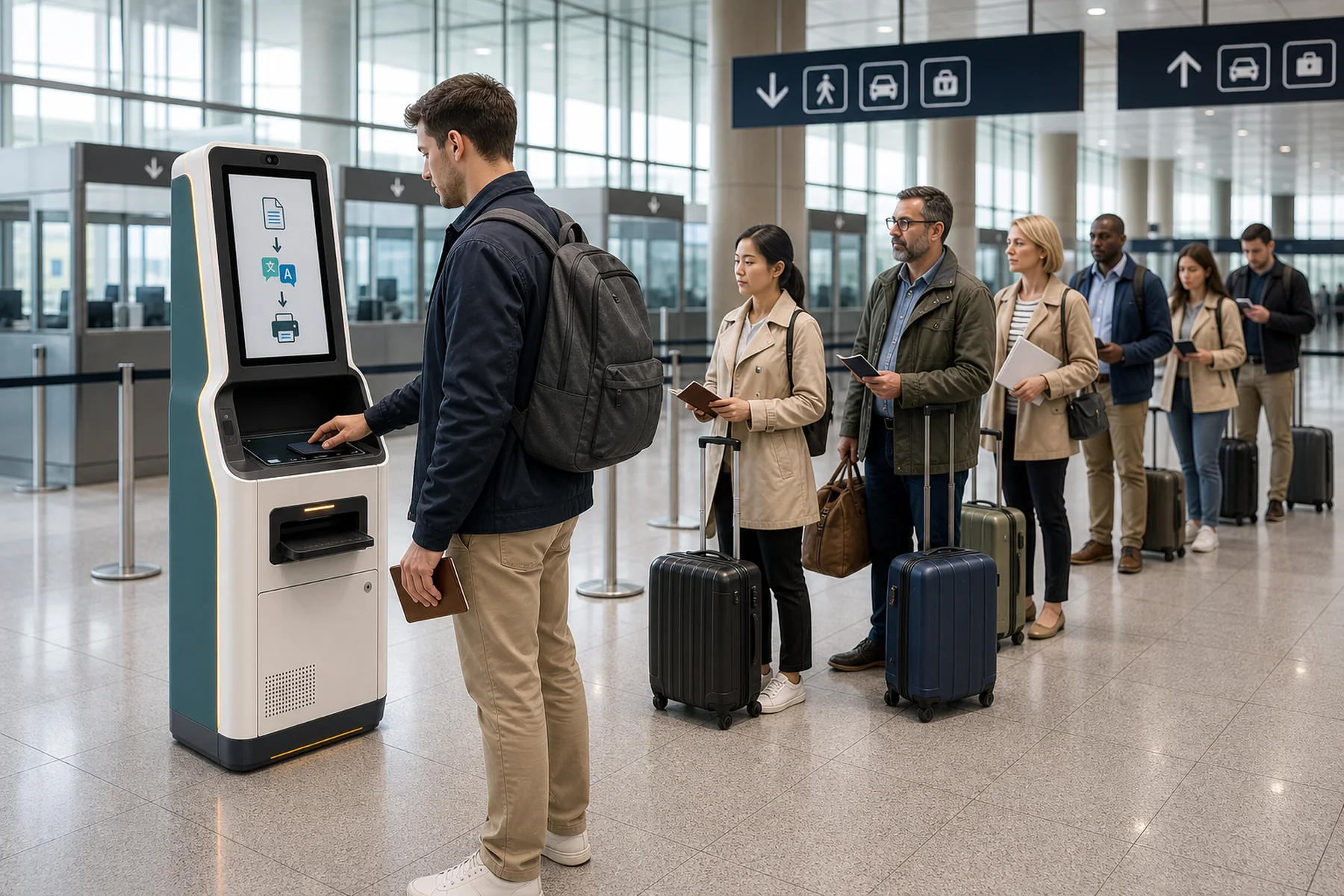
Place 24/7 translation access near cross-border traffic so travelers can scan documents and receive printed translations at the same location.
Place translation close to the moment documents are needed. The kiosk keeps the front desk simple while a remote service team handles the work behind it.
Accept document translation requests outside normal counter hours, including nights, weekends and holidays.
Linguists work from the shared service desk, so each location does not need a dedicated translator on site.
Users can scan documents where the need occurs instead of leaving to find a separate translation provider.
A standardized device and remote workflow make it easier to test and expand new service points.
The kiosk extends the reach of the existing team. It turns physical locations into request and delivery points while production remains centralized.
| Traditional staffed counter | Self-service translation kiosk |
|---|---|
| Service availability is tied to staffed opening hours | The location can accept translation requests 24/7 |
| Every location needs on-site coordination for translation requests | A shared backend team serves multiple physical points |
| A new point usually requires a fuller counter setup | Equipment plus venue enables a lighter pilot |
| Demand peaks create concentrated queues and handoffs | Scanning, translation return and printing form one journey |
Start with a pilot, own the equipment, or combine our equipment with your venue. Commercial terms can be designed around the location and expected demand.
Introduce the service with a lighter initial commitment and validate real demand at the selected location.
Discuss a placementOwn the equipment and build it into your long-term service network and brand experience.
Discuss a placementWe provide the equipment while the partner provides the site, then agree on operations and commercial terms together.
Discuss a placementWe will assess foot traffic, service hours, placement conditions and expected document demand before recommending a rollout plan.
Notary offices and ports are the primary scenarios. Government service halls, business centers and other high-traffic locations with recurring document translation demand can also be assessed.
No. The kiosk handles the on-site self-service flow, scanning and printing. Professional linguists in the backend receive and complete the translation.
Yes. The completed translation is returned to the kiosk and the device supports on-site printing.
We support leasing, outright purchase, and joint arrangements in which we provide the equipment and the partner provides the venue. Other structures can be discussed for the location.
The service team operates 24/7. Exact language availability and turnaround depend on the document, language pair and service requirements, and are confirmed for the deployment and each order.
Tell us about your organization and candidate location. We will help evaluate the scenario and propose a practical equipment and cooperation plan.
For a faster assessment, include your organization type, city, candidate venue and expected service hours. Please do not send personal identity documents in the first inquiry.